How to Use Pareto Analysis to Solve Everyday Problems
Ever feel overwhelmed by too many issues at once? Whether it’s workplace inefficiencies, customer complaints, or even personal challenges, Pareto Analysis can help you focus on what truly matters.
What is Pareto Analysis?
Pareto Analysis is based on the 80/20 Principle, which states that 80% of problems often come from 20% of causes. By identifying and prioritizing these critical few causes, you can make the biggest impact with the least effort.
Why It Works
Instead of spreading resources thin across all problems, Pareto Analysis helps you:
Focus on high-impact issues
Allocate resources effectively
Drive faster, measurable improvements
How to Apply Pareto Analysis
List All Problems
Gather data on issues—defects, delays, complaints, or tasks.Measure Impact
Quantify each problem (frequency, cost, time lost).Rank Problems
Sort from highest to lowest impact.Calculate Cumulative Percentage
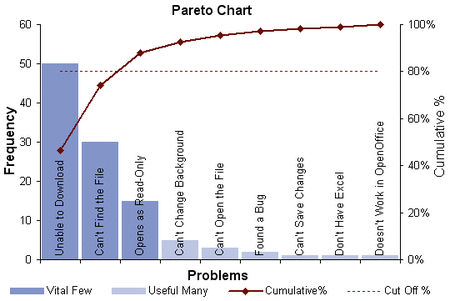
Determine which problems make up the top 80%.Create a Pareto Chart
Visualize the data to see the “vital few” vs. “trivial many.”
Everyday Examples
At Work:
If 80% of customer complaints come from 3 product defects, fix those first.At Home:
If most stress comes from two recurring tasks, automate or delegate them.
Tips for Success
Use real data, not assumptions.
Revisit analysis regularly—priorities change.
Combine with root cause analysis for lasting solutions.
Pareto Analysis turns complexity into clarity. By focusing on the few causes that create the most problems, you can achieve significant improvements without burning out.