Brainstorming
Involve those who will be Affected: need to make sure to solicit the upfront involvement of People affected by the problem or its solution and People with expertise in the subject matter.
Focus on the Root Causes i.e. Make the affected parties revisit the significant root causes to get to a solution. Then, pick an Idea Generation Technique.
Key techniques used for idea generation and synthesis are:
Brain-writing
Benchmarking
Assumption Busting
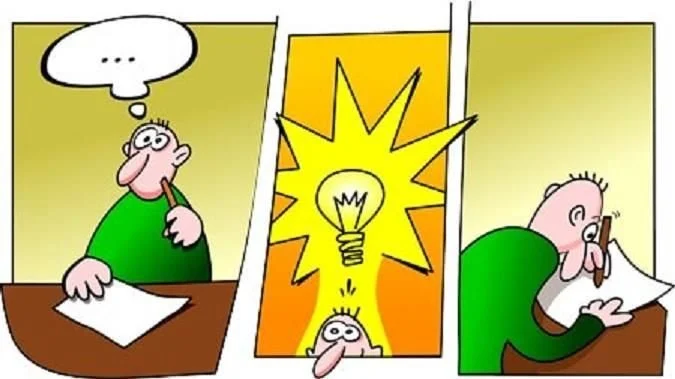
Idea Generation Techniques
Brain-writing
Brain-writing is a technique used to generate many ideas in a short period of time.
Two key modified brainstorming techniques used are Brain-writing 6-3-5 and Constrained Brain-writing.
Brainwriting 6-3-5
The name brain-writing 6-3-5 comes from the process of having 6 people write 3 ideas in 5 minutes on a pre-defined parameter.
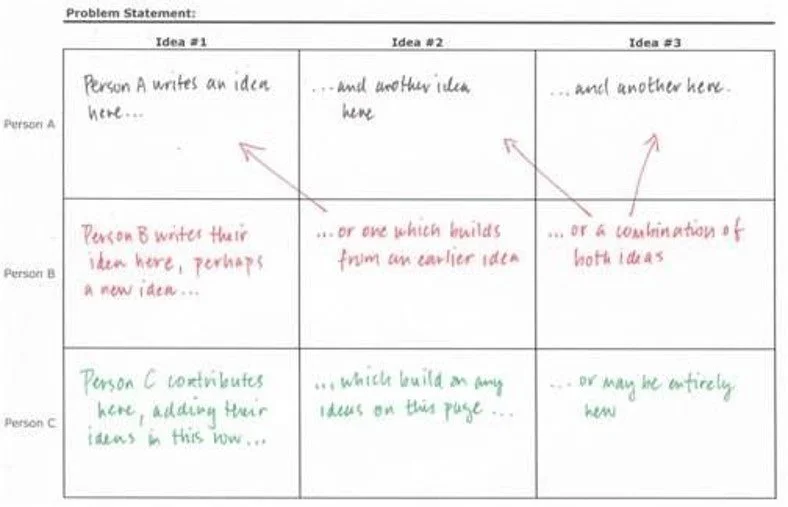
Constrained Brain-writing
The name-constrained brain-writing comes from the fact that on certain occasions the team may want to have a set of constrained ideas around a pre-determined focus, rather than ranging freely (for example, no capital investment).
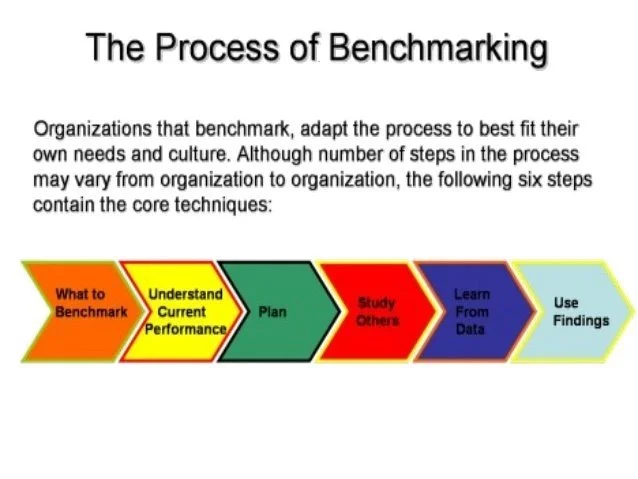
Benchmarking
Process benchmarking is a technique of continually searching for the best methods, practices, and processes, and either adopting or adapting their good features and implementing them to become the “best of the best”.
Assumption Busting
Assumption busting as a technique is used to trace back from the current performance problems to identify rules and then surface underlying assumptions.
The key steps involved in assumption busting are:
Revisit the current problem at hand.
Identify the rule(s) responsible for the problem.
Trace the rule(s) back to an assumption in the process.
Test to break the assumption – Is it wrong from the start? Or, Can it be made untrue?