Project Charter
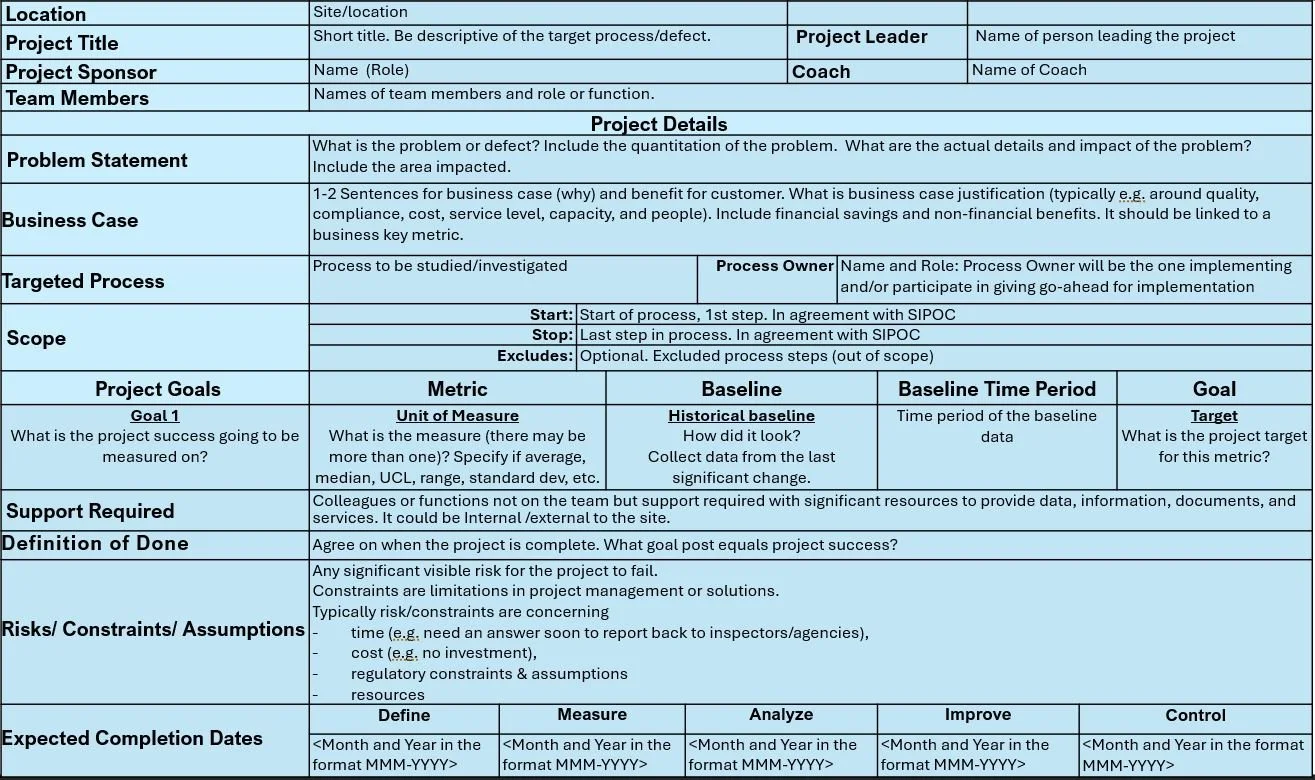
Project Charter is the most important document of a project; it tells the story of your project.
Project Charters include:
Project Title: Short title. Be descriptive of the target process/defect. Use words that will make it easy to search for your project (EX: name of the product, name of equipment, a main lean tool used, etc. No need to include words such as “improve”, “enhance”, “increase”, “decrease”, “optimize”)
Problem Statement: What is the problem or defect? If possible, include the quantitation of the problem. What is the actual detail and impact of the problem? Include the area impacted.
Business Case: 1-2 Sentences for business case (why) and/or benefit for the customer. What is business case justification (typically e.g. around quality, compliance, cost, service level, capacity, and people)? Include financial savings and non-financial benefits.
Scope: Scope refers to the boundaries and extent of a project or process improvement initiative. It defines the specific objectives, deliverables, and outcomes that the Six Sigma team aims to achieve and identifies the areas and processes that will be impacted by the project.
Baseline Metrics: Historical baseline. How did it look? (EX: What is the monthly average for this process)
Goal: What is the project target for this metric?
Timeline: What are the expected completion dates for each phase in the process (DMAIC)?
Definition of Done: Agree on when the project is complete. What goal post equals project success?
Depending on your project there is a lot more you can add, this would be the bare minimum.
Team Members:
Sponsor: Typically, upper leadership, this person wants the project to succeed and will help guide the project lead
Project Lead: A person who is running the project and is responsible for its success
Project Coach: Typically, a Lean Six Sigma Black Belt who is coaching the project lead on methodology and execution
Process Owner: The person who owns the process and can make changes to it (Should be different every project, think “Area Owner”)